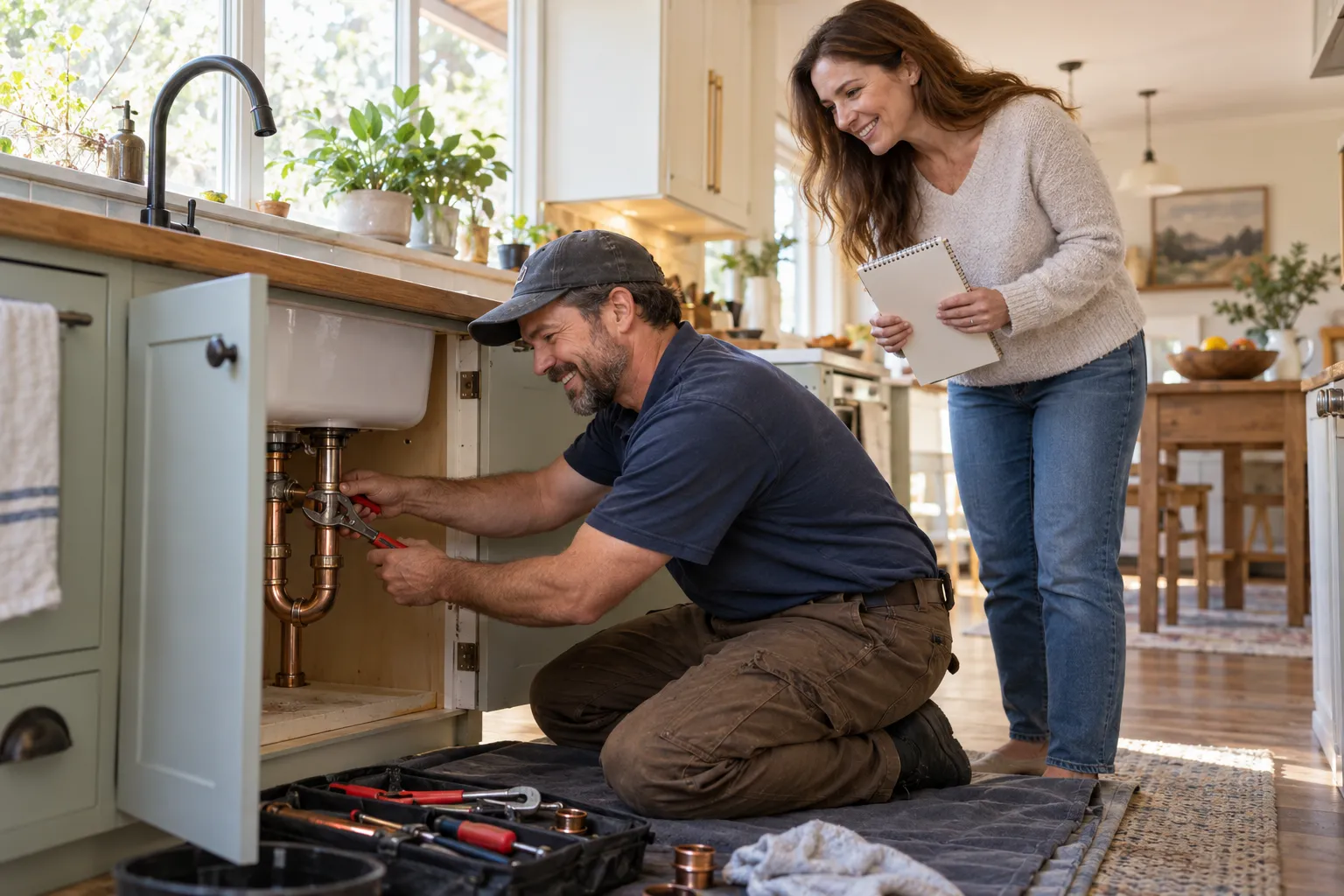
Emergency Plumbing
Water where it should not be is stressful, so start with a few safe steps, then compare local providers.
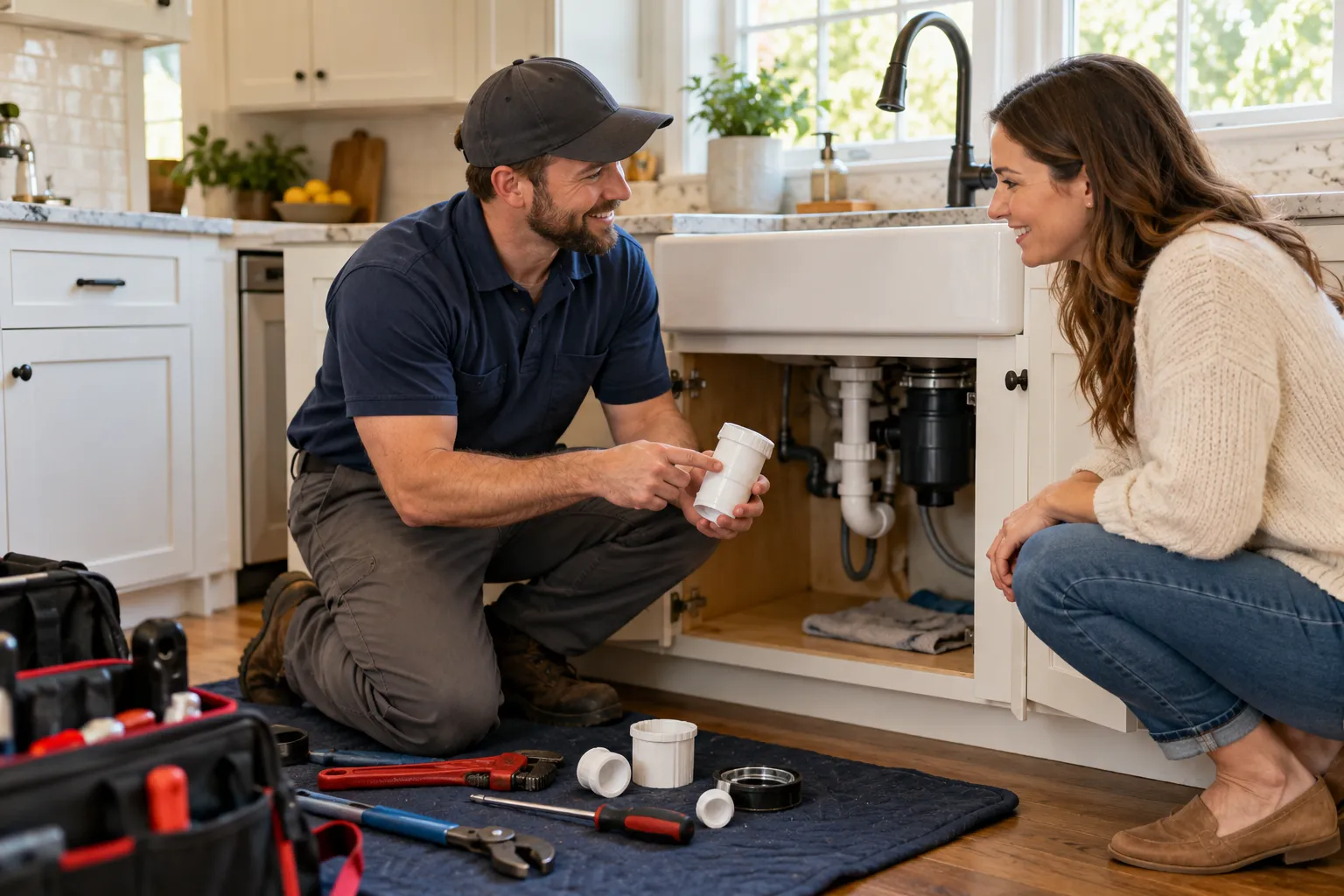
Burst pipe? Backed-up drain? Fifatesting Plumbing connects you with independent local providers. You hear the plan, compare estimates in plain words, and choose what fits your home and budget.
A plumbing emergency is any problem that can quickly damage your home or put health at risk. Examples are a burst pipe, water you cannot stop, sewage backing up, or no water at all in cold weather. Shut off the main valve first, then ask a provider for help.
Often, yes, for a slow sink or tub. A plunger or a small hand snake can work. Do not use harsh chemicals, since they can harm pipes. If several drains are slow or sewage rises, the main line may be blocked, and that needs a provider.
It depends on the problem, the pipe length and how deep it sits. In the U.S., small spot repairs often start near $1,500. Full replacements can reach $10,000 or more. Get a written quote from each provider and compare what is included.
No. Fifatesting Plumbing is a referral service. We connect you with an independent local provider in our network. That provider visits your home, gives you an estimate and does the work if you agree. You are never required to hire.
It depends on your policy. Some policies may cover sudden damage, but not slow leaks or wear. Check your policy and ask your insurer. Providers can often help document damage for a claim, so take photos.
Three kinds of help are listed below. Pick the one that fits your problem. Each page explains the signs to watch for, what a provider may do, and what you can safely try first. If you are not sure which one you need, start with emergency plumbing and let the provider sort it out.
Water where it should not be is stressful, so start with a few safe steps, then compare local providers.
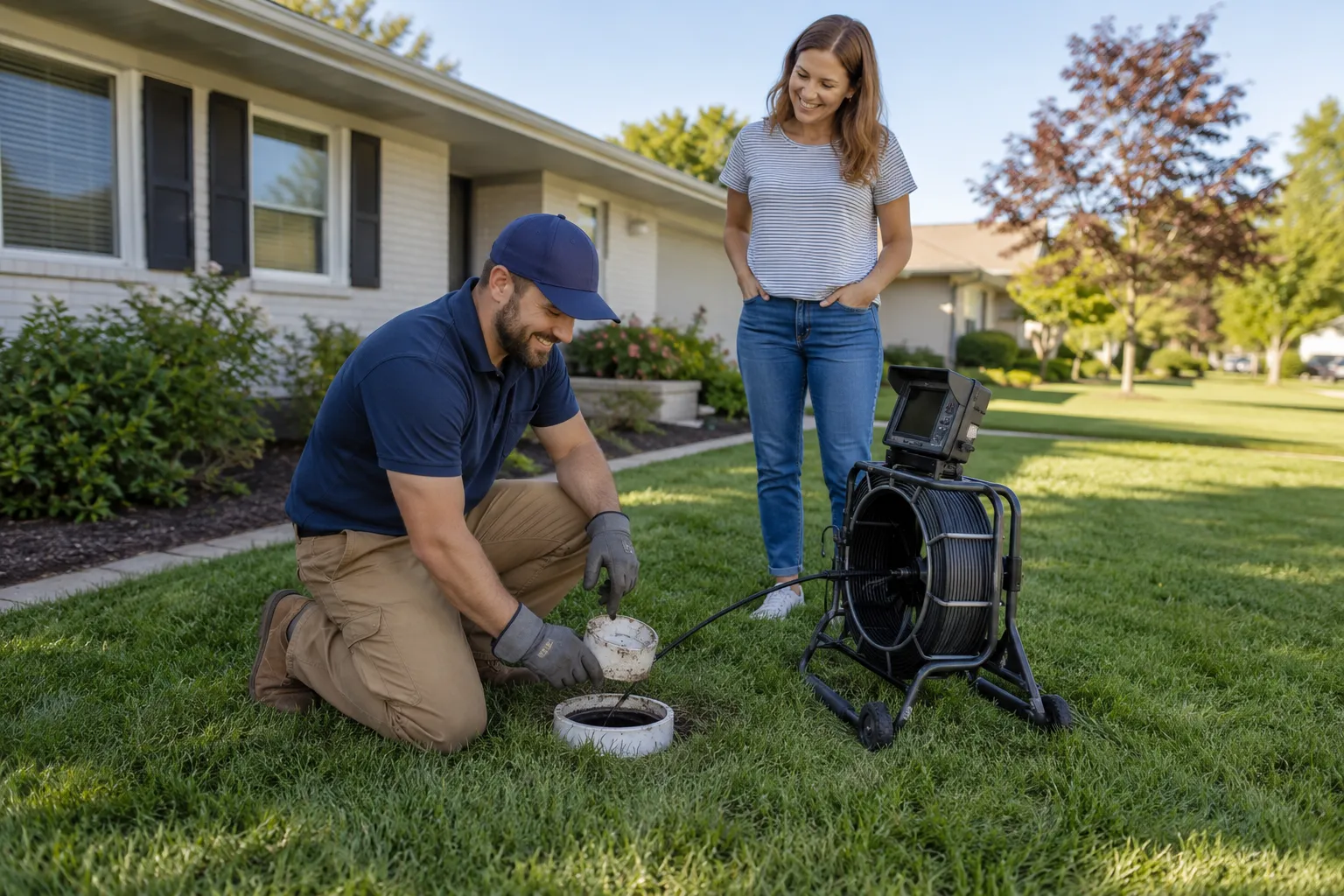
Find out what is wrong with your main sewer line, what your options are, and how to choose.
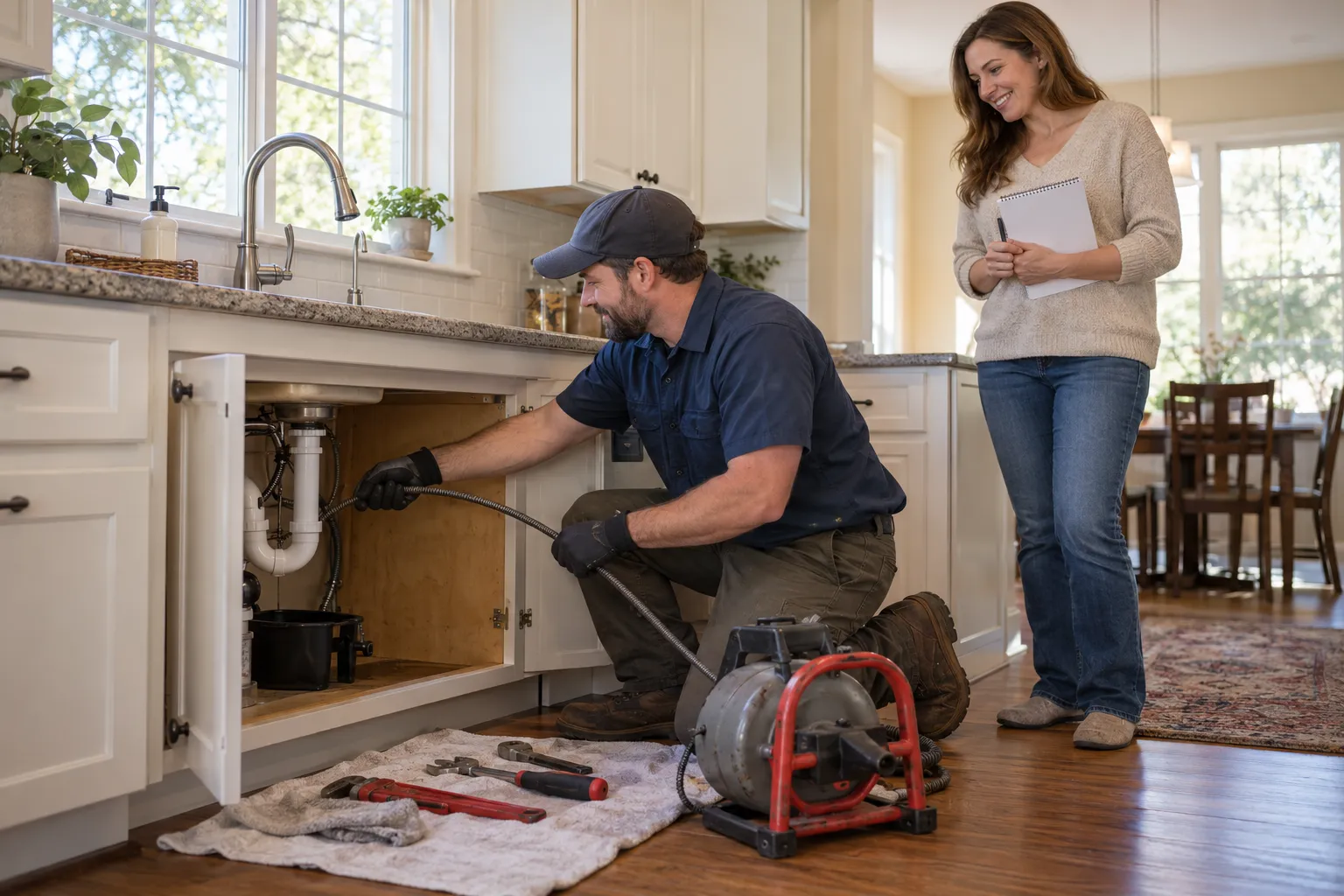
A clogged drain is easy to fix when you know what to try, what to skip, and when to get help.
Tell us what is wrong and where you are. We will point you to a local provider in our network. You compare the estimate and choose, with no obligation.
A pipe bursts. A toilet backs up. A bad smell rises from a floor drain. These things are stressful, and they often happen at the worst time. Fifatesting Plumbing helps you take the next step.
Fifatesting Plumbing is a referral service. We connect homeowners in De Soto, KS with independent local plumbers, drain clearing providers and sewer repair providers. We do not do the work. The provider you talk to does.
Here is how it goes. You tell us what is wrong. We point you to a provider in our network. The provider looks at the problem and gives you an estimate. You can compare it with another one. Then you decide. There is no obligation.
Many providers can respond quickly, but timing depends on the provider, the weather and the day. Request a callback to check provider availability near you.
If water is running and you cannot stop it, shut off the main water valve first. Most homeowners can do that safely. It can limit damage while you wait for help.
Fifatesting Plumbing is a referral service. You tell us about your problem, and we connect you with a provider who does that kind of work. A provider is an independent local business. It sets its own prices, its own schedule and its own methods.
Fifatesting Plumbing does not do the repairs. Providers in our network do the work. We do not promise a price or an arrival time. We help you reach the right kind of help, so you spend less time searching.
First, you describe the problem. Next, a provider in our network gets in touch. The provider checks the issue. For a blocked drain, that may mean a camera look inside the pipe. A drain camera is a small lens on a long cable. It shows what is stuck in the line. Then you get an estimate.
You can ask for more than one estimate. Put them side by side. Check what each one includes. Check the method and the total. A good provider explains the plan in plain words and gives it to you in writing. You can say no. You can take time to think.
Some steps are safe for you:
Other jobs need professional tools. Cable machines, hydro jetting (blasting a pipe clean with high-pressure water) and sewer cameras are not for home use. Digging near a sewer line can be unsafe. Sewage, gas and wet wiring add real risk. Leave those jobs to a provider.
Fifatesting Plumbing serves homeowners in De Soto and across the De Soto area. The region has big temperature swings, hail, high wind and strong spring storms. Winters are cold and dry. All of that is hard on pipes, roofs and yards.
Many homes here are frame-built ranch houses. Lots tend to be wide. That often means the sewer line, the pipe that carries waste from your house to the main line, runs a long way. A longer line has more room for roots, cracks and clogs.
Basements and storm cellars bring their own risks. A backup or a burst pipe can put water in a low room fast. Floor drains in those spaces matter more than most people think.
Where you live inside the De Soto area may change which providers are nearby. Some travel farther than others. Ask each provider about its service area and its schedule before you agree to anything.
Want to see numbers before you decide? Request an estimate and compare what comes back.
You stay in charge. If an estimate does not feel right, you can say no and ask someone else.
Big swings between hot and cold make pipes expand and shrink. Over time, joints loosen and small cracks form. A hard cold snap can turn water inside a pipe into ice. Ice can split the pipe.
Ranch homes spread pipes across one level. A leak in one wall can run a long way before you see it. Basements sit at the low point, so water ends up there first. Check low rooms often.
Wide lots mean more pipe underground. Roots, shifting soil and old materials all take a toll. If drains gurgle or slow down in several rooms, the problem may be in the main line, not one sink.
Heavy rain can flood the ground and push water into sewer lines. Wind can bring down limbs that crack outdoor pipes. After a storm, check your yard, your basement and your drains.
Dry air does not stop pipes from getting cold. Insulate pipes in crawl spaces and outside walls. Let a faucet drip on the coldest nights. Know where your main shutoff is before you need it.
Ask each provider what it thinks is wrong and how it plans to fix it. Ask what is included. Ask about extra charges. Get the estimate in writing. A calm, clear answer is a good sign.
Prices vary a lot by job. In the U.S., a plumber visit for a leak often runs about $150 to $500. Clearing a drain often runs about $100 to $350. Sewer line repair can run from about $1,500 for a small spot fix to $10,000 or more for a long replacement. Always get a written quote.
Some policies may cover sudden damage. Others do not. Check your policy and ask your insurer. Providers can often help document damage for a claim, so take photos and keep your paperwork.
Have a leak, a clog or a sewer smell? Tell us what is going on. We will point you to a local provider in our network. You hear the plan, see the estimate and decide with no obligation.
Request a callback to check provider availability, or use the request form on the contact page to send the details.
Share your city, the room affected and what you have already tried. It helps the provider understand the job.
Ask for more than one estimate. See the plan, the method and the total side by side, then pick what makes sense for you.
Pipes have confusing words. Providers can explain them in simple terms, and this site defines each trade term as it comes up.
The providers in our network are independent businesses near you. They know the climate, the older ranch homes and the long sewer lines here.
Asking for an estimate does not mean you must hire anyone. Take your time, ask questions and decide when you feel ready.
Tell us what is wrong and where you are. We will point you to a local provider in our network. You compare the estimate and choose, with no obligation.
No obligation